








The Expert’s Guide to Rare Diamond Cuts: The Top 5 Rarest
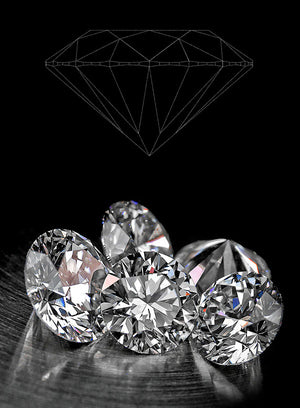
Rare diamond cuts are those where the design has focused on artistry, with complex craftsmanship, proportions, and often antique origins.
Getting your hands on one is a difficult feat, both financially and just in terms of actually finding one. Due to their price, patents, and amount of discarded rough diamonds during production, these diamonds are not produced in high quantities.
In this guide, we’ll explain the Top 5 Rarest Diamond Cuts so you can make an informed decision before investing in one of humanity’s greatest shows of craftsmanship.
What Makes a Diamond Cut Rare?
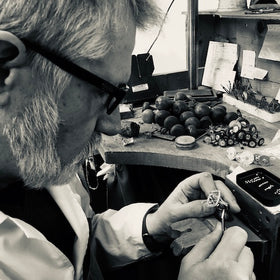
Diamonds become rare when they are extremely difficult to find outside of select sellers. This is mostly due to a limited supply of rough diamonds available for their production. Many of the rarest designs require a significant quantity of rough diamond to be sacrificed to cut the shape. Achieving this naturally requires some immense craftsmanship skill, and only a few cutters in the world have the ability. One error sees the beautiful symmetry and precision destroyed.
Rarity is also increased when there are brand or patent exclusivities. So, you won’t find them in large quantities on the market. You can think of this in a similar way to how fashion has haute couture.
Finally, there are antique cuts (such as Old Mine Diamond Cut and Old European Cuts) that have become rare with time because they’re simply not produced anymore. These vintage stones also possess a unique charm and personality, as they were handcrafted under candlelight and have individual quirks and flaws. Many people see them as time capsules and are highly sought after.
The Top 5 Rarest Diamond Cuts
-
Ashoka Cut
The Ashoka Cut is a very rare diamond cut, beloved as an engagement or wedding ring. Despite being a modern rarity and trademarked in the 1990s, it is rooted in ancient legend via inspiration from a historic 41.37 cut Golconda diamond.
The cut has a distinctive shape similar to that of an emerald and cushion, but with an elongated rectangular shape and 62 facets. You’ll enjoy a fiery brilliance.
Its unique shape means it can only be crafted from large, long pieces of rough diamonds. When combined with William Goldberg’s trademark, it is very rare.

-
Jubilee Cut
Created in 1897 to mark Queen Victoria’s Diamond Jubilee, the Jubilee Cut is one of the rarest diamond cuts around (particularly amongst those without a table). With 88 facets, it creates a stunning symmetrical pattern which looks like a blend of round brilliant and rose cut designs.
With its royal association and historical value, it is a collector's piece that features 30 more facets than the modern round brilliant. Few examples of it exist, having never hit mainstream popularity.

-
Criss Cut
While similar to the classic Emerald cut, the patented Criss Cut design features an octagonal or rectangular shape made from 77 facets for a wonderful, fiery brilliance.
It is only available through licensed jewelers and requires a large amount of carat weight to be thrown out during production.
Finally, the shallow depth of the stone means the carat weight is spread across a larger surface area for the larger finger coverage.
-
Kite Cut
Popularized during the Art Deco era (1920s to 1930s), the fancy Kite shape is a rare diamond cut that has been revived in modern designs.
Shaped like a geometric kit, it requires specially suited roughness and produces a unique, stunning silhouette. Despite not having the most stunning brilliance, it sparkles in a unique manner that is perfect in a three-stone diamond ring or as the centerpiece of a solitaire setting.
-
Asprey Cut
Developed for Asprey, this cut is an exclusive house signature with a hand-cut tradition. Appearing similar to a cushion-shaped diamond, it has 61 facets for an increased brilliance and incredible sparkle.
Its rarity comes thanks to the fact that it can only be crafted from diamond rough with D to G color grade, flawless to VS2 clarity, and cannot be machine cut.
Bonus: Vintage Cuts
Vintage cuts are those that were once popular but have become sparsely found in modern markets. In particular, Ole Mine Cut and Rose Cut diamonds were once handcrafted under candlelight - giving them a softer, moody glow.
Old Mine Cuts were popular from the 1700s to the late 1800s, often cut from Brazilian mine rough, but now, they’re a collectors dream. They have a cushion-like shape.
Rose-cut diamonds were found back in 16th-century Renaissance Europe, with an early faceting style of a flared base and domed crown. Today, their soft shimmer is a true antique piece that modern design standards cannot replicate.

Why Choose a Rare Diamond Cut?
As with any rare purchase, you’re getting your hands on an item that stands out in a market dominated by round brilliants (80% of the market). While Round Brilliants offer something stunning and are perfect for many people, a Rare Diamond Cut gives you something truly unique. It makes a statement.
They also have a heritage that many people consider to be romantic, and gives the wearer a story to tell.
Rare Diamond Cuts are also fantastic examples of humanity’s best craftsmanship, and there’s something special to be said for wearing such a stone.
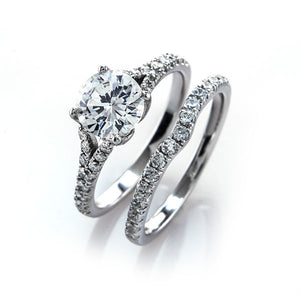
If you’re considering a Rare Diamond Cut as an engagement ring or wedding ring, we believe you’re guaranteeing a sense of dedication and commitment. To many, a unique cut represents a unique love.
FAQs for Rare Diamond Cuts
Which Diamond Cut Has The Most Value?
Amongst rare cut diamonds, the Ashoka cut fetches the highest premium.
What Is The Least Valuable Diamond Cut?
Low-quality cut round diamonds are amongst the least valuable, as they are produced in large quantities.
What Is The Most Luxurious Diamond Cut?
We’d argue this is down to personal taste. But the Ashoka Cut, Jubilee Cut, and Asprey Cuts are renowned for their luxury and are extremely hard to find, with only select jewelers permitted to sell them.
What Is The Rarest Cut For A Diamond?
The Jubilee Cut is almost extinct, making it extremely rare. The Ashoka cut is also ultra-limited due to its trademark.

Leave a comment