








Jewelry education: Engagement ring settings
Shopping for custom jewelry can be downright confusing if you don't have any background knowledge about design esthetics. Throw in the fact that you're probably feeling nervous about selecting the perfect custom engagement ring, and you're more than likely to forget any information you may have read prior to talking with the jeweler. Brush up on your diamond education with these industry terms before your next shopping excursion so you'll have a better understanding of what the types of engagement ring settings are and how they differ from one another:
Prong
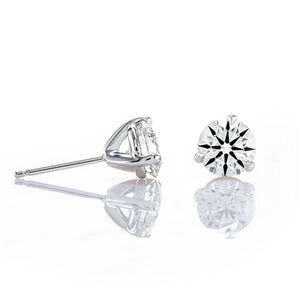
If you are searching for a solitaire engagement ring, you'll likely be selecting from various prong settings. This claw-like design is typically raised above the base of the setting. The claws are essentially bent slightly over the stone to hold it in place. One such design from the Brian Gavin collection is the classic Style Knife Edge solitaire engagement ring, which is created with a center stone set in a six-prong setting.
Bezel
Bezel set engagement rings encompasses the design ideas used to contain a single-stone in a prong setting. Whereas the diamond setting is exposed in a prong setting, a bezel engagement ring design is created with a piece of metal that either partially or completely surrounds the stone to hold it in place. The Full Bezel Solitaire from the Brian Gavin Collection can be used to hold a round diamond as well as other diamond shapes upon request.
Gypsy
If you're worried that a large stone may snag or get caught during everyday activities, a gypsy set engagement ring may be the perfect solution for your fiance. This unique settings consists of sunken holes cut into the band, allowing the diamond(s) to be placed flush with the ring's surface.
Pave
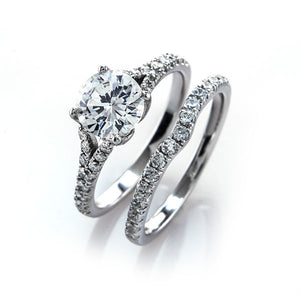
If you're searching for a diamond ring with some serious sparkle, consider a pave design. This type of custom engagement ring is created by surrounding small diamonds around the center stone. The small diamonds are set very close together, adding even more luster to the solitaire stone. The Nicole design from the Brian Gavin collection is an excellent example of a diamond pave engagement ring setting.
Bar
Unlike a pave setting, where the small diamonds are set very close together, a bar setting is designed with pieces of metal situated between each stone. The total carat weight of the Half Moon Eternity bar women's diamond wedding band is based on the size of the ring. The ring averages 20 signature melee diamonds, equaling 1 ctw.
Channel
This type of ring design is commonly used to create diamond eternity bands. Channel set engagement rings are built using two tracks of precious metal on either side to hold a row of gemstones or diamonds side-by-side. Amari is a perfect example of a channel setting. The custom crafted band is created using a 10 mm band with cut-out diamond shapes.
Tension
The compression-spring pressure of the settings shanks are designed to hold a diamond firmly in place, giving the illusion that the stone is "floating" above the band. This type or custom ring design is typically reserved for setting stones such as diamonds, rubies and sapphires, as these are the only types of gemstones that can withstand this type of pressure. If you're looking for a one-of-a-kind engagement ring, the Spiral of Love design is hard to beat.
